Cheapest Electricity Plans

Electricity bills are one of the biggest ongoing costs Australian households face, and finding the cheapest electricity plans shouldn’t be this hard. GoSwitch compares options from leading energy retailers across NSW, VIC, QLD, SA, and ACT so you can see what’s available in your area and switch in minutes, for free.

How Electricity Rates Are Calculated in Australia

Published 7 May 202610 mins read

Every electricity bill in Australia is made up of two core charges. Your usage charges cover the actual power you consume, measured in kilowatt-hours (kWh), and are billed at a per-kWh rate set by your retailer. Your daily supply charge covers your network connection costs and appears as a fixed daily fee on every bill.

The Australian Energy Regulator sets a reference price known as the Default Market Offer (DMO), which acts as a pricing benchmark across the energy market. Retailers must show how their plans compare against this reference price, making it easier to spot a genuine deal. Market offers from retailers often sit below the DMO and include GST in all advertised electricity prices.
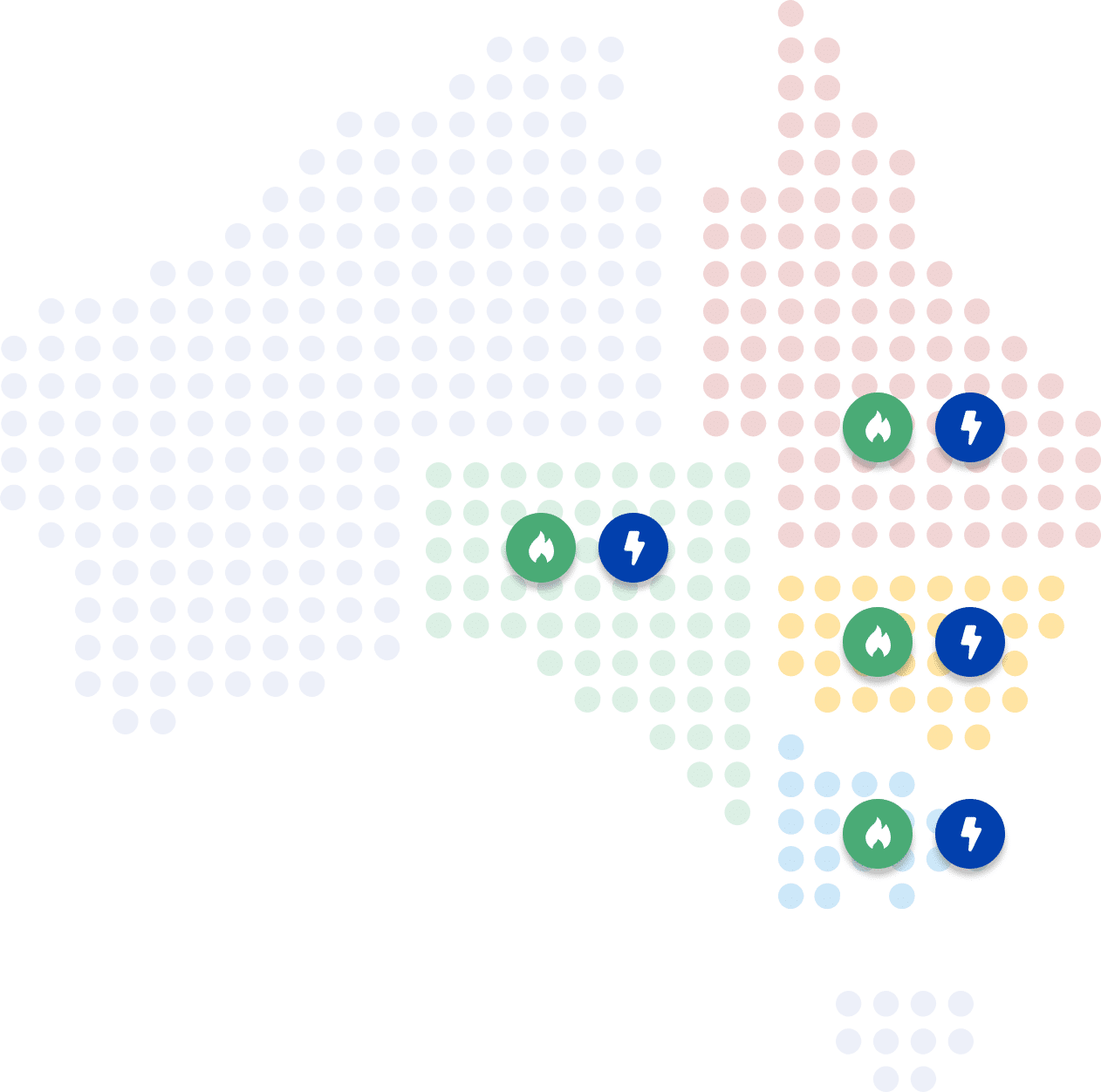

engie map
contact us to compare electricity plans

What Is the Cheapest Electricity Plan Right Now?

No single electricity provider holds the cheapest rate for every household. Electricity plans are priced differently by each energy retailer based on your postcode, tariff type, and usage, so the best deal in Brisbane may not be the better deal in Adelaide.

If you haven’t reviewed your plan recently, you may be on a standing offer, which is a basic plan that sits at or near the Default Market Offer reference price. Market offers from retailers regularly come in below this benchmark and often include perks for new customers, such as a bill credit or conditional discounts during a set benefit period.

The table below shows indicative market offer pricing by state based on estimated annual cost for a typical residential household.


State AER Reference Price Cheapest Market Offer (approx.) Potential Annual Saving
NSW $1,965/year From $1,491/year Up to $474
VIC $1,546/year (VDO) From $1,215/year Up to $331
QLD $2,143/year From $1,500/year Up to $643
SA $2,301/year From $1,828/year Up to $473


Figures are indicative, based on AER and Essential Services Commission benchmark data for standard residential usage. Enter your postcode on GoSwitch to compare live pricing for your specific area.

New South Wales and the ACT

Ausgrid, Endeavour Energy, and Essential Energy distribute electricity across NSW and the ACT. Energy retailers competing in this market include AGL, Origin Energy, EnergyAustralia, Red Energy, Alinta Energy, GloBird Energy, and OVO Energy.

Victoria

CitiPower, Powercor, AusNet Services, United Energy, and Jemena distribute electricity across Victoria. Retailers in this market include AGL, Origin Energy, EnergyAustralia, Alinta Energy, Tango Energy, and GloBird Energy.

Queensland

Energex covers South East QLD, including Brisbane, the Gold Coast, and the Sunshine Coast. Energy retailers operating in Queensland include AGL, Origin Energy, EnergyAustralia, Red Energy, OVO Energy, and Alinta Energy.

South Australia

SA Power Networks is the sole distributor across South Australia. Energy providers competing for residential customers in SA include AGL, Origin Energy, EnergyAustralia, OVO Energy, Alinta Energy, and Energy Locals.

Because electricity prices shift regularly across all these networks, the cheapest provider in your state today may not hold that position next quarter.

Which Tariff Type Gives You the Cheapest Electricity Rate?

The cheapest tariff type depends on when and how you use power, not just the headline cents-per-kWh rate. Two households on the same street can pay very different amounts simply because of when they run their appliances. Understanding the four main options helps you match your energy usage to the structure that actually costs you less.

  • A single rate tariff, also called a basic plan, charges one flat rate per kWh at all hours. It suits households with consistent electricity usage and small business customers who need a predictable energy bill.
  • A time of use tariff splits the day into peak, shoulder, and off-peak periods at different rates. Households that can shift usage to off-peak hours, like running appliances overnight, can cut their annual kWh costs noticeably.
  • A controlled load tariff applies a lower off-peak rate to high-draw appliances on a dedicated circuit, most commonly electric hot water systems, reducing that portion of your electricity usage without affecting the rest of your plan.
  • A demand tariff charges based on your highest usage spike during a set peak window each month, rewarding households that stagger appliance use to avoid simultaneous draws on the network.

What Is the Average Electricity Bill in Australia?

The average electricity bill in Australia varies by state, household size, and electricity usage, but the Australian Energy Regulator publishes annual benchmark figures that give residential customers a reliable starting point for comparison.

The table below shows the AER’s current reference price benchmarks by state for a typical residential household, inclusive of GST.


State Network Annual kWh Usage AER Reference Price (2025-26)
NSW Ausgrid 3,900 kWh $1,965/year
VIC CitiPower (VDO) 4,000 kWh $1,546/year
QLD Energex 4,600 kWh $2,143/year
SA SA Power Networks 4,000 kWh $2,301/year

These figures represent the maximum a retailer can charge on a standing offer for a typical residential customer. Many market offers sit well below these benchmarks, which is why reviewing your energy bill against the reference price for your state is the clearest way to tell whether you’re overpaying.

How the Daily Supply Charge Affects What You Pay

Every electricity plan includes two core costs: usage charges billed per kWh, and a daily supply charge, a fixed connection fee applied regardless of how much power you use.

A plan with a low usage rate but a high daily supply charge can cost more annually than one with slightly higher usage charges and a lower supply charge. Always compare estimated annual cost across electricity plans, not just the headline energy rate.

Hidden fees can also inflate what appears to be a cheap energy plan. Watch out for:

  • Paper bills fees, charged by some retailers for printed statements instead of digital billing
  • Credit card surcharges, applied when you pay by card rather than direct debit
  • Late payment fees, added when bills are not paid by the due date

Setting up direct debit removes the credit card surcharge and late payment risk, and some retailers offer a small conditional discount for customers who pay this way. Always check the full fee schedule on a plan’s fact sheet before switching.

Can Bundling Electricity and Gas Cut Your Costs?

Bundling electricity and gas plans under one energy provider can come with a bill credit or discounted usage rate, but it does not always deliver a better deal than two separate plans. Natural gas availability varies by suburb and state, so bundling is not an option for every household.

Where it is available, retailers including AGL, Dodo, and Powershop offer dual-fuel plans. Always compare the estimated cost of a bundle against standalone electricity and gas plans separately before committing. GoSwitch compares both options side by side so you can see which combination is genuinely cheaper.

Smiling young spouses sitting on gray sofa while discussing papers

Rebates That Lower Your Electricity Bill

Eligible residential customers across Australia can access government rebates that reduce what they pay on each energy bill. Eligibility varies by program and state, but most rebates require a valid concession card, a Health Care Card, or a qualifying Centrelink payment.

Current rebates by state include:

  • NSW – The Low Income Household Rebate provides up to $285 per year, and the Family Energy Rebate offers up to $180 per year for eligible households. Both are applied directly to your electricity bill.
  • VIC – The Annual Electricity Concession provides eligible concession cardholders with $230.65 per year, applied as a daily credit on their electricity bill. The Utility Relief Grant provides up to $650 per utility type in a two-year period for households in temporary financial hardship.
  • QLD – The Queensland Electricity Rebate provides $386.34 per year (GST inclusive) for eligible concession cardholders, credited quarterly to their electricity bill.
  • SA – The Cost of Living Concession provides an indexed annual payment to eligible SA households, with the 2025-26 amount published by ConcessionsSA each July.

Households with solar panels can also reduce their energy bill through a solar feed-in tariff, which credits exported renewable energy back against what you owe. Some retailers offer GreenPower options, allowing residential customers to offset their electricity usage with accredited renewable energy sources.

How to Find the Cheapest Electricity Plan in Your Area

The fastest way to find the cheapest electricity plan for your postcode is to compare estimated annual costs across all available energy retailers, not just browse individual provider websites. If you are on a standing offer, a market offer from a competing provider could deliver immediate savings.

Follow these steps to make a confident switch:

  1. Pull out your most recent electricity bill and note your annual kWh usage and current tariff type.
  2. Enter your postcode into GoSwitch to see available energy plans in your area ranked by estimated annual cost.
  3. Compare full annual costs across energy retailers, including usage rates, daily supply charges, and any conditional discounts.
  4. Check each plan’s fact sheet for exit fees, benefit period conditions, and payment requirements before committing.

Select your preferred market offer and GoSwitch manages the switch from end to end.

How to Switch Electricity Providers Easily

Switching providers does not cut your power supply. Your distributor, whether that is Ausgrid, Energex, SA Power Networks, or another network operator, continues managing the physical supply regardless of which electricity retailer you move to. The switch is entirely administrative.

The process is straightforward and takes less than a few minutes:

  1. Compare plans and select a new energy provider through GoSwitch.
  2. Sign up online. Your new retailer notifies your current one and manages the transfer.
  3. Check for exit fees on your current plan before confirming.
  4. Set up direct debit if required to access conditional discounts or a bill credit for new customers.
  5. A final meter read closes your old account and billing moves to your new electricity retailer within one to two billing cycles.

There is no interruption to supply, no paperwork, and no contact with your old energy provider required. The energy market is competitive, and switching regularly is one of the simplest ways to avoid paying more than you need to.

Read our Reviews in TrustPilot

FAQs

Electricity plan pricing is shaped by your usage rates, daily supply charge, tariff type, and whether conditional discounts apply. Your postcode also determines which energy retailers and distributors serve your area, directly affecting the plans available to you. An energy comparison through GoSwitch accounts for all these variables, so you can see your true estimated annual cost before switching.

A fixed rate plan locks in your usage rates for a set period, protecting you from price increases but potentially preventing you from accessing cheaper market offers as they emerge. A variable rate plan moves with the market, which can work in your favour when electricity prices drop. GoSwitch makes it easy to run a fresh comparison each year so you are never locked into a plan that no longer suits you.

Savings depend on your state, usage, and current plan, but Australian households on a standing offer can save anywhere from $300 to over $600 per year by switching to a competitive market offer. Households that bundle electricity with a gas bill may find additional savings through dual-fuel discounts. GoSwitch compares available plans in your area for free so you can see exactly what you stand to save.

Leave a Reply